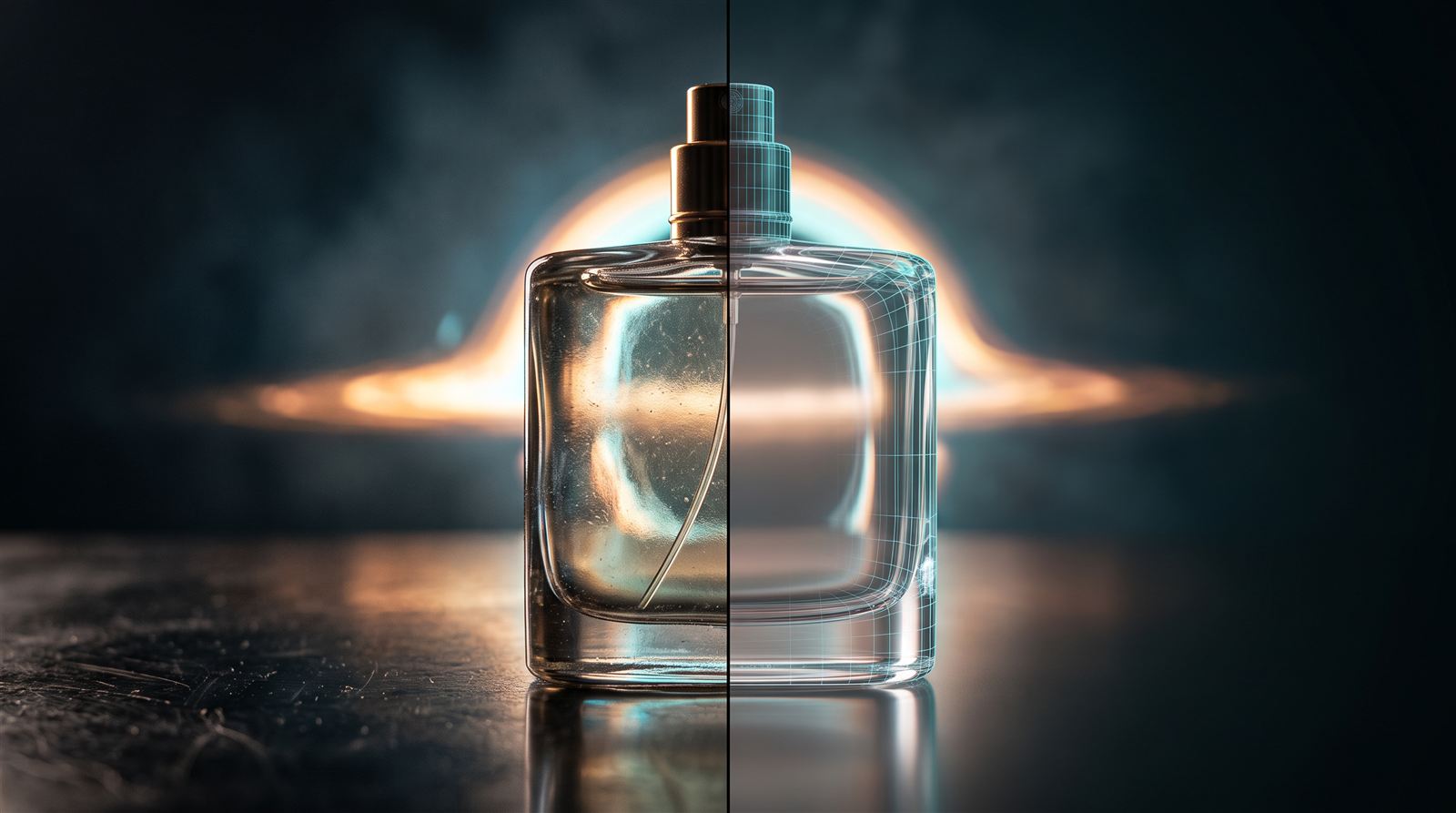
CGI (computer-generated 3D graphics) is a better deal than a shoot in three cases: when you need to show an object in dozens of variants, when it is physically hard to film (water splashes, thick glass, mirror-like metal), and when it does not exist yet. In every other case a camera and a real person are simpler and cheaper. The good decision is not "CGI or a shoot" but an honest calculation for your task.
What are CGI and VFX in plain words?
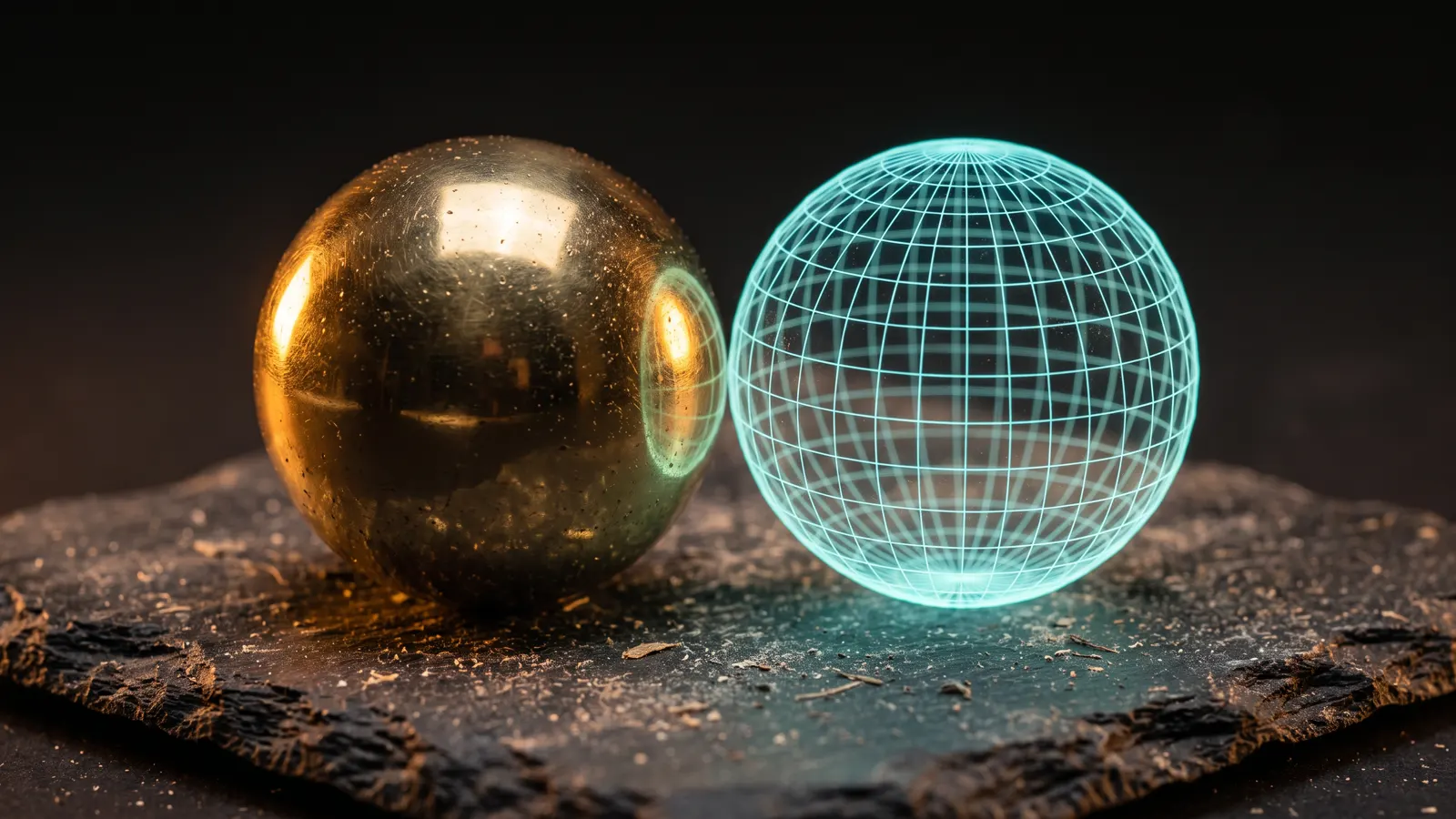
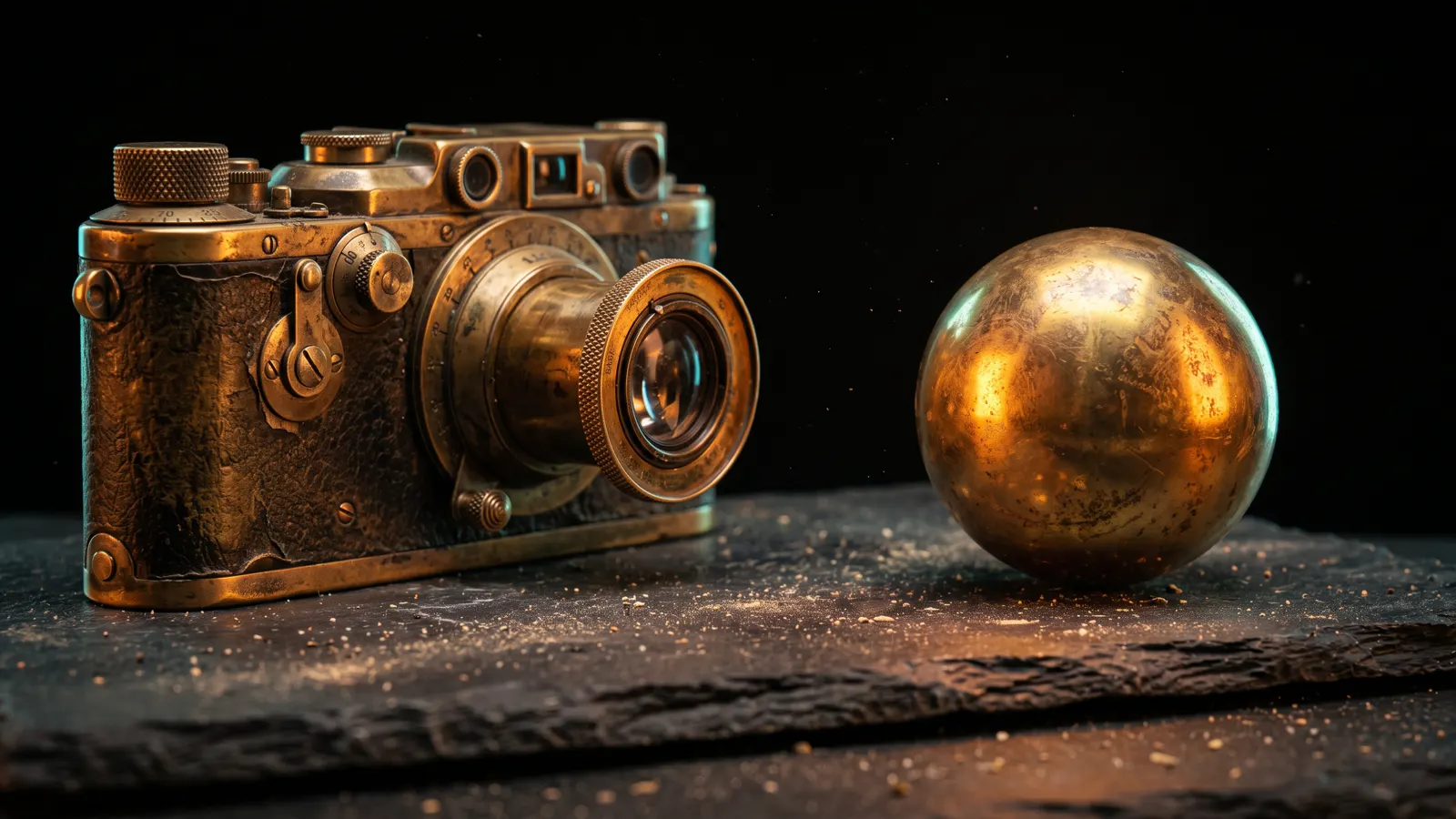
CGI is an image or video made on a computer: an object is modelled in 3D, light and materials are set up, and you get a "photo" (a render). VFX are visual effects added to filmed footage: smoke, an explosion, a background swap. The first builds the frame from scratch, the second improves a live one.
When should you choose CGI?
- Many variants of one product. A frame in five colours, packaging in three sizes. In 3D you change a material, not a whole shooting day.
- A material that is hard to film. Glass catches every glare, metal reflects the photographer, water never repeats. In 3D you can set light and physics and repeat them.
- The product does not exist yet. You need ads before production, or a pre-order for a new collection.
- You need impossible angles. A camera inside a drop or in a cross-section of a bottle.
- Made once, used many times. One scene yields posters, banners, videos and packaging.
When is a regular shoot better?
- You need real people and emotion. A face, a laugh, a reaction.
- One simple product and one picture. A white-background shoot is cheaper and faster.
- "Real" matters. Food in a restaurant, an office interior, the actual team.
- The deadline is very tight and the scene is simple.
How do you decide: a short algorithm
- Count how many image variants you need per year.
- Judge how fussy the material is: transparent, glossy, liquid?
- Ask whether a person must be in the frame. If yes, it is a shoot, and CGI can be added to it.
- Compare the cost of one frame at your volume. On big series, 3D usually comes out cheaper.
- Don't forget revisions: changing a colour in 3D takes minutes, a reshoot is another day.
What does this look like in real projects?
All the projects below were made by our founder at his previous agency, Axel Consulting.
Water and chocolate: what is hard to film
The Blanc Bleu and Ocard project has 118 works: physical simulations of water splashes and drops on glass, the Blanc Bleu x Porsche and Blanc Bleu x Ultima collaborations, and Ocard chocolate packaging. Filming water so a drop lands exactly right can take days. In 3D you set it up and repeat it.
Eyewear and products: many variants, many details
For Fabricio optics we made 96 master renders of frames: acetate, titanium, lenses with anti-glare coating, close-ups of hinges. For Yase, 44 product renders and packaging in 3D. When you need dozens of equally clean frames under one light, 3D beats a studio.
Perfume: glass that is hard to tame
In the By Mirage project there are ten perfume ad shots: faceted glass bottles, gold embossing, and calculated caustics (the light patterns cast by thick glass). In a real shoot such a frame needs perfect light and a lot of patience.
How much does a CGI video or render cost in Tashkent?
There is no single price: it depends on how complex the product is, how many frames you need, how realistic it must look and how many revisions you want. Below are 2026 benchmarks in US dollars: cheap freelance first, then a studio with a producer, quality control and guaranteed deadlines. These are market ranges, not an OXEN price list.
- One product render (bottle, packaging, gadget): $30–250 from a freelancer, $300–1,500 from a studio.
- A series of 10–20 frames for a catalog or marketplace: $250–1,200 freelance, Tashkent,500–6,000 studio.
- 3D product animation, 10–30 seconds: $500–2,000 freelance, $2,000–8,000 studio.
- A CGI insert in a commercial (a 3–5 second shot): $500–2,000 freelance, Tashkent,500–6,000 studio.
- A cinematic CGI commercial, 30–60 seconds: $2,500–8,000 freelance, $9,000–40,000 and up from a studio.
A series costs less than the same frames bought one by one: the model, materials and lighting are built once, and after that only the angle and background change. So the tenth frame costs noticeably less than the first.
There is also a third way: mix. Live footage of a person plus a 3D product or background often beats either extreme, and the budget stays moderate.
Bottom line
CGI does not replace a shoot, it is a tool for tasks where a camera gives up. If you are unsure, send us the product and an example of what you want to see: we will say honestly where 3D is needed and where a camera is enough. More in the motion and 3D section.